Cluck for Your Money: One Supermarket Chicken, Four 30g Lunches, Zero Sad Salad
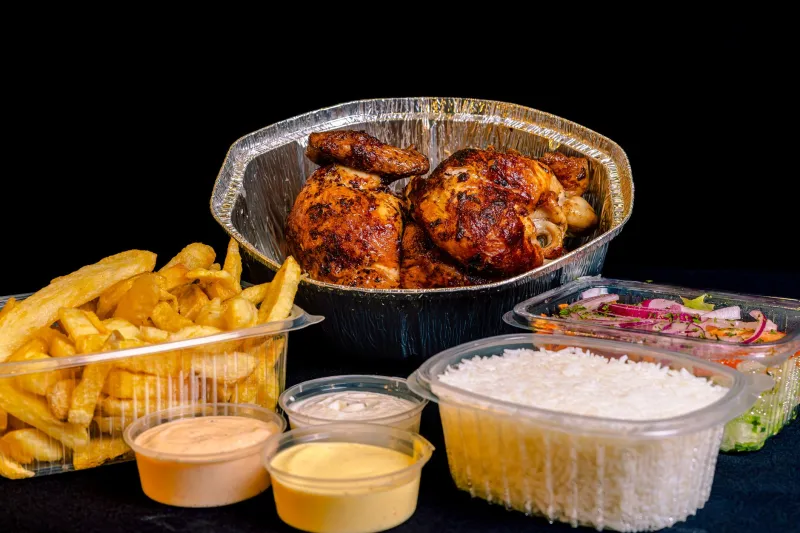
There is a moment, somewhere around 6pm on a weekday, when the hot counter chicken goes from being dinner to being a plan. Six quid, roughly, for a bird that's already cooked, already seasoned, and already sitting under a lamp quietly waiting to solve your week. Most of us buy it, eat a leg and a bit of breast, then spend the next three days looking at cold chicken in a tub and feeling mildly disappointed.
That's a waste. Not just of money — of the single best protein-per-penny item in a UK supermarket that isn't a bag of frozen mince.
The maths before the meal
Let's do this properly, because the numbers are better than you'd expect.
A standard hot-counter bird from Tesco, Sainsbury's, Asda or Morrisons tends to run between £5 and £6.50 depending on size and whether you've caught it yellow-stickered near closing. A bird of around 1.3–1.5kg gives you somewhere in the region of 500–600g of actual edible meat once you've pulled it off the carcass. Call it 550g on a decent day.
Cooked chicken breast and thigh together land at roughly 27g of protein per 100g. So one bird carries about 145–150g of protein inside it.
At £6, that's around 4p per gram of protein.
Now look at the alternatives. Supermarket cooked chicken slices: £2.50 for 120g, which is about 10p per gram. A £5 meal deal sandwich that might, on a generous day, hand you 22g: over 20p per gram. Even a decent tin of tuna, which is genuinely good value, works out closer to 6–7p per gram once you've drained it.
The bird wins. It wins comfortably. And that's before you count the stock you can make from the bones, which we'll get to.
Cooling it without playing roulette
This is the bit people get wrong, and it's the bit worth being boring about for thirty seconds.
Cooked chicken from a hot counter has been sitting in a warm cabinet — a temperature range bacteria quite like. Get it home, get it out of the bag, and get the meat off the bone within two hours of buying it. Not four. Two.
Once stripped, spread the meat out in a shallow container rather than piling it into a deep tub — surface area is your friend, and a thin layer cools fast. Lid it once it's stopped steaming, then fridge it. Eat within two days, and if you know you won't get through it by then, freeze half on the day you buy it, not on day three when you've suddenly realised.
Reheat once, thoroughly, and never twice. If it's going into a soup or a curry, add it late and let it come up to temperature in the sauce rather than boiling it for twenty minutes into stringy submission.
And the carcass? Bag it, fridge it, and simmer it with an onion, a carrot and a bay leaf for an hour that evening or the next. That's your Thursday soup base, free.
Monday: the wrap that isn't a punishment
Take about 110g of meat — a generous handful, roughly 30g of protein — and shred it. Mix with two tablespoons of Greek yoghurt, a teaspoon of harissa or chipotle paste, a squeeze of lemon and a pinch of cumin. Load it into a wholemeal wrap with shredded red cabbage and pickled onions.
The yoghurt does the job mayonnaise would do but adds protein instead of just fat, and the cabbage gives you crunch and fibre. You've got a lunch around 35g of protein for under a pound of bird.
Tuesday: the soup that earns the bones
Strain your stock, then build on it: a tin of chopped tomatoes, a handful of frozen sweetcorn, a teaspoon of smoked paprika and a small nest of fine noodles. Simmer until the noodles are nearly done, then add 100g of shredded chicken and a big handful of spinach off the heat.
You're looking at 32g of protein and a bowl that genuinely tastes like something you'd pay £7 for in a café. Add a slice of wholemeal toast if you need the carbs — usually you will.
Wednesday: the grain bowl that saves the day
This is the one that stops the week going stale. Cook a batch of couscous or bulgur, or use a microwave pouch if today is not a heroic day. Pile on 110g of chicken, a big spoon of chickpeas, cucumber, tomato, and a dressing of tahini loosened with lemon and water.
Chickpeas are the quiet hero here — they push the fibre up, which most macro plans quietly ignore, and they make the bowl feel like a meal rather than a portion.
Thursday: the hot tea
By Thursday you want something warm and you want it to feel like dinner, not lunch. Fry a sliced leek in a little oil, add a teaspoon of curry powder or dried tarragon, tip in a tin of chopped tomatoes or a splash of cream, then fold through the last of the chicken and serve over rice or a baked potato.
That's the bird finished, four lunches deep, and none of them were the same sad salad.
The flavour-swap map
If you get bored easily — and most of us do — swap the seasoning rather than the structure:
| Direction | Seasoning | Crunch | Sauce |
|---|---|---|---|
| Mediterranean | Oregano, lemon zest | Cucumber, red onion | Tahini and lemon |
| Mexican-ish | Cumin, smoked paprika | Shredded cabbage | Yoghurt and lime |
| Asian-leaning | Soy, ginger, sesame | Bean sprouts, carrot | Peanut or chilli |
| British comfort | Tarragon, mustard | Leek, peas | Crème fraîche |
Same 110g of chicken, four completely different lunches.
Two things to watch
Rotisserie chickens are brined, which means they're saltier than the raw bird you'd cook yourself. If you're watching sodium, go easy on extra stock cubes, soy sauce and cured meats in the same meal.
And be honest about the skin. It's the best bit and it's fine to eat it — just count it. It's fat, not protein, and pretending otherwise is how the maths stops working.
Six pounds. Four lunches. Roughly 4p per gram of protein and a stock pot you didn't pay for. The hot counter deserves more respect than we give it.