Bread, Butter and Better Maths: A Sandwich That Still Crunches at Noon
There's a reason Bake Off contestants dread the soggy bottom, and it's the same reason your chicken salad bap is weeping into its own cling film by half ten. Water moves. It moves down, through crumb, until it finds the weakest point in the structure — and in a packed lunch, that point is always the bottom slice.
So let's treat the lunchbox like the small engineering problem it is. You want 30g of protein, you want it under about two quid, and you want it to still be pleasant to eat when the morning has already had a go at you.
The bread has to do two jobs at once
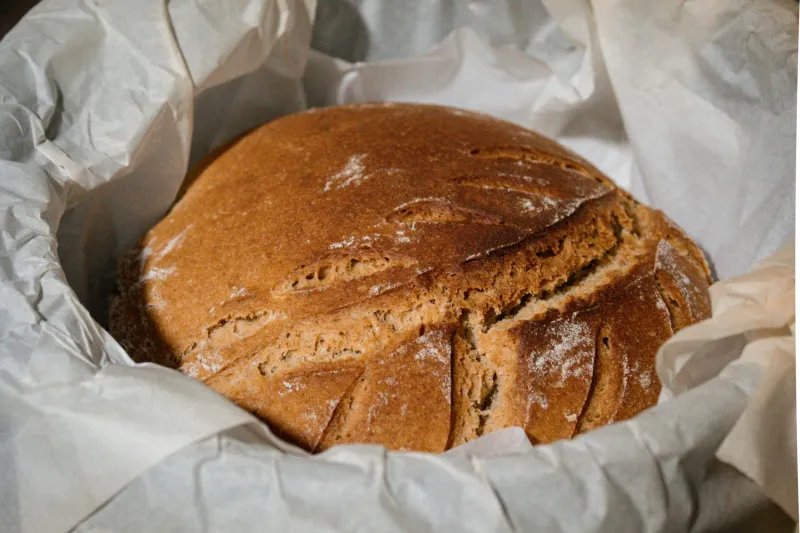
Most supermarket loaves are engineered for softness — high hydration, tight crumb, squishy crust. Delicious on the day you buy it, hopeless in a bag. What you want is something with enough backbone to hold a serious filling without collapsing.
Seeded wholemeal, granary, a decent sourdough, or a chunky wholemeal bap all work. On the numbers, two slices of a good seeded wholemeal land around 5–7g of protein and 6–8g of fibre, which is a genuinely useful contribution rather than a rounding error.
The 'high-protein' loaves deserve a caveat. Some do deliver 12–15g per 100g versus 9–10g for a standard loaf, but check the slice weight, because plenty of them compensate by making each slice thinner. You can end up with the same protein per sandwich and a lighter wallet. Flip the bag over, look at protein per 100g and protein per slice, then decide.
The moisture barrier is the whole game
Here's the thing nobody tells you: lettuce is not a barrier. Lettuce is a reservoir. A wet leaf pressed against bread is just a slower way of soaking it.
What actually works, in rough order of effort:
- Fat. A thin smear of butter, cream cheese or a full-fat spread on both slices. Fat is hydrophobic — it lines the crumb and slows the soak. It costs you maybe 40 calories and buys you four hours.
- A physical layer. A square of baking parchment between bread and wet filling. Slightly eccentric, entirely effective, especially for anything involving tomato.
- Separation. Pack the wet components — tomato, cucumber, pickle, sauce — in a small pot and add them at the desk. Thirty seconds of assembly beats a damp sandwich.
- Order of operations. Bottom slice, fat barrier, dense protein, cheese, then anything crunchy, then top slice with its own fat barrier. That's it. That's the whole system.
One more: pat everything dry before it goes in. Chicken straight out of the fridge is wet. Tinned tuna needs draining properly, not a optimistic press with a fork.
Fillings that carry their weight
You need roughly 24g of protein from the filling to clear 30g overall, which is more achievable than it sounds.
- 80g cooked chicken thigh — about 20g
- Half a tin of tuna, drained — 15–18g
- 60g mature cheddar — around 15g
- 100g cottage cheese — 11g, and it doubles as your fat barrier
- Two boiled eggs — 13g
- 50g edamame beans, cooked and cooled — 6g, plus crunch
- 40g sliced ham — 8g, useful as a top-up rather than a headline
The winning combinations tend to be one big protein plus one small one. Chicken thigh with a grating of cheddar and a spoon of pickle. Tuna with cottage cheese and black pepper, bound together so it can't migrate. Egg and edamame with a bit of mustard. Add a handful of spinach to any of them — it's cheap, it's fibre, and it doesn't offend anyone.
What it actually costs
Prices as of late 2026, shopping at a mid-range supermarket rather than chasing every yellow sticker:
- Two slices of seeded wholemeal from a £1.50 loaf (20 slices): 15p
- 80g cooked chicken thigh from a £5.50 kilo pack: about 60p
- 30g cheddar from a 400g block at £3.60: 27p
- Butter or spread, per sandwich: 8p
- Pickle, spinach, seasoning: 15p
That's roughly £1.25 a lunch and about 32g of protein. Even the tuna version, using a 65p tin split across two days, comes in under £1.10. Compare that to a £4.75 supermarket meal deal and the maths stops being subtle.
The catch, obviously, is the labour. Which brings us to the bit that makes or breaks this.
The Sunday pattern
You are not making five sandwiches on a Monday morning. Nobody is. What you're doing is a forty-minute session on Sunday evening that removes every decision from the week ahead.
- One tray of chicken thighs. Boneless, skinless, seasoned heavily, 30 minutes at 200°C. Cool, slice, box. This is the spine of three lunches.
- Six eggs, boiled and cooled. Two go into sandwiches, the rest are snacks for the 3pm gap.
- Two tins of tuna, drained and mixed with cottage cheese, lemon and pepper. Keeps three days in a lidded pot.
- A jar of pickles and a bag of spinach — the two cheap items that make everything else taste less like meal prep.
- Cheese grated in advance. It's a small thing. It saves four minutes and one argument with yourself at 7am.
Then you assemble in the evening, or in the morning if you're disciplined. Either way the components are already there, which is the entire point.
The fridge, the cool bag, and the freezer trick
Office workers have it easy: build the sandwich at home, keep the wet stuff in a separate pot, and reassemble at your desk with the office butter nobody cleans up. If you're on a site or in a van, a decent cool bag plus one frozen ice block will hold a sandwich safely through to lunch, and packing it tight stops everything sliding around.
And the trick worth knowing: you can freeze a finished sandwich. Make a batch on Sunday, wrap each one tightly, freeze. Take one out in the morning and by noon it's thawed and the bread is as fresh as the day it was baked, because the freezing process interrupts staling. Just don't freeze anything with raw salad in it — cucumber and lettuce turn to mush. Chicken, cheese, tuna mayo, ham: all fine.
The takeaway
Thirty grams of protein at lunch isn't hard. It's just a question of whether you're willing to spend twenty minutes thinking about it once a week. The bread needs structure, the water needs a barrier, the filling needs to be big enough to do the job, and the whole thing needs to cost less than the meal deal it's replacing.
Get those four right and the sandwich stops being the sad bit of your day. It becomes the thing you actually look forward to at twelve.