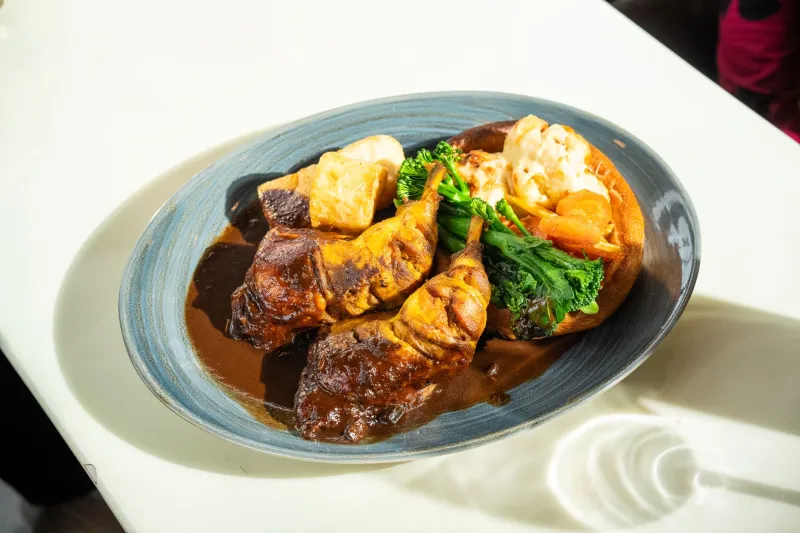
Roast Dinner Maths: Building a 35g-Protein Plate That Keeps the Yorkshires
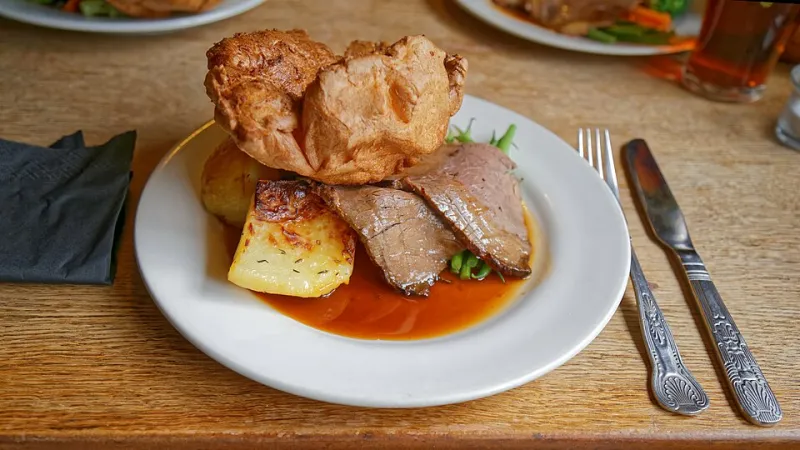
Photo: Acabashi, CC BY-SA 4.0, via Wikimedia Commons
There's a particular kind of resignation that creeps into the conversation about Sunday lunch. It's the assumption that the roast is a write-off — something to be enjoyed and then atoned for. That framing is exhausting, and it's also unnecessary. A roast dinner is just a plate with variables, and once you can see the variables, you can nudge them.
This isn't about shrinking the meal. It's about ordering it properly, so the protein lands where it should, the vegetables do some actual work, and the Yorkshire puddings stay on the plate rather than in the bin of good intentions.
Decide the anchor before you think about sides
Most roast problems start with the protein being an afterthought — a couple of thin slices carved apologetically at the end. Flip that. Choose the anchor first and build the rest of the plate around it.
Chicken. A 120g cooked portion of skinless breast lands you at roughly 36g protein for about 190 calories. Thighs are more forgiving on flavour and only marginally heavier on fat; a 120g cooked portion still clears 30g protein comfortably.
Beef. Lean topside or silverside, cooked and rested, sits around 28g protein per 100g. A 125g carved portion gets you to roughly 35g — and because it's a slow, satisfying eat, it tends to slow the whole meal down.
The nut roast. This is where vegetarian roasts often fall short, and it's rarely the fault of the recipe. A nut roast built on lentils, cashews, oats and a bit of cheddar can hit 18–22g protein in a decent 180g slab, but only if those ingredients are actually in there. If yours is mostly vegetables and breadcrumbs, add butter beans to the tray or serve a spoon of Greek yogurt alongside. It's a small change that turns a side dish into a co-anchor.
Whichever route you take, the goal is the same: one clear protein source, portioned deliberately, not carved by vibe.
Potatoes and Yorkshires have numbers too
Roast potatoes aren't a moral failing, they're a carbohydrate with a fat cost attached. If you par-boil and roast 180–200g of Maris Pipers in a tablespoon of oil or a little beef dripping, you're looking at roughly 250–300 calories. That's a normal, useful amount of food, and it comes with potassium and a bit of fibre if you leave the skins on.
Yorkshire pudding is where people tend to overcorrect. A medium Yorkshire is around 80–100 calories, with about 2–3g protein from the egg and milk in the batter. Two of them is a completely reasonable line item at roughly 160–200 calories. What tips the scales isn't the pudding itself — it's the four you eat standing up in the kitchen while the meat rests. Plate them, sit down, done.
A workable carb budget: 180g roast potatoes plus two medium Yorkshires comes to around 450 calories and gives you room for a proper portion of everything else.
Make the vegetables carry the fibre
Here's the bit that quietly solves most of the meal. A roast is one of the easiest dinners in the British repertoire to push towards 10g+ of fibre, because the vegetables are already there — they just need to be portioned like food rather than garnish.
Aim for 200–250g of cooked veg across two or three types. Carrots, broccoli, Savoy cabbage, peas, swede, Brussels sprouts if the mood takes you. That sort of volume typically delivers 8–10g of fibre for roughly 100 calories, plus a decent hit of vitamin C and folate.
Two practical notes. First, cook them properly — steamed broccoli that's still got some bite is far more pleasant than the grey version that gets boiled into submission. Second, go easy on the butter if you're counting, but don't pretend a knob of it is what's breaking the meal. It's usually the oil tray and the second helping of potatoes.
Gravy: the quiet calorie line
Gravy gets a bad reputation for the wrong reasons. Made from the roasting juices with the fat skimmed off and a little cornflour to thicken, a generous ladle is often only 50–70 calories. That's fine. What adds up is gravy made with a roux of butter and flour, poured over everything until the plate becomes soup.
Use it for flavour, not volume. One good ladle, poured over the meat and potatoes rather than drowning the veg.
What the finished plate looks like
A sample built along these lines:
- 120g cooked chicken breast — roughly 36g protein, 190 calories
- 180g roast potatoes — around 260 calories
- Two medium Yorkshires — around 180 calories, 5g protein
- 250g mixed veg — around 100 calories, 9g fibre
- One ladle of skimmed-pan gravy — around 60 calories
Total: roughly 790 calories, 43g protein and close to 11g fibre. That's a full, traditional roast that clears a useful protein target without touching the Yorkshire tin. Swap the chicken for beef and the protein stays similar; swap in a well-built nut roast and you're still landing in the 25–30g region, which is a respectable lunch.
Then leave the rest of the day alone
One of the reasons roasts feel heavy is that they're often bolted onto a big breakfast and a picking-at-4pm session. You don't need to fast, and you certainly don't need a penance walk. Just keep the morning simple — yogurt and fruit, or eggs on toast — and treat the roast as the day's main event.
A 30g fibre target across the day is far easier to hit when lunch is doing 10g of the work. Add a piece of fruit and a portion of pulses or wholegrain at breakfast and you're most of the way there.
The point of the exercise
A roast is a ritual as much as a meal, and rituals get brittle when you start policing them. The maths above isn't a rulebook; it's reassurance. Protein first, vegetables in real quantities, potatoes and Yorkshires portioned and plated rather than grazed. Do that and the Sunday roast stops being the meal you negotiate with and goes back to being the one you look forward to.