Christmas Dinner Without the Food Police: A Macro-Smart 2026 Menu
Christmas dinner is one of those meals where nutrition advice can get a bit Scrooge-like. You do not need to swap the roast potatoes for salad, and you certainly do not need to count every sprout. But if you are someone who likes a bit of protein and fibre with your festivities, there are small, sensible tweaks that make the whole plate work harder without turning the day into a diet. This is the MacroFood take on a 2026 Christmas menu: generous, traditional and just a little more balanced.
Start with the plate, not a spreadsheet
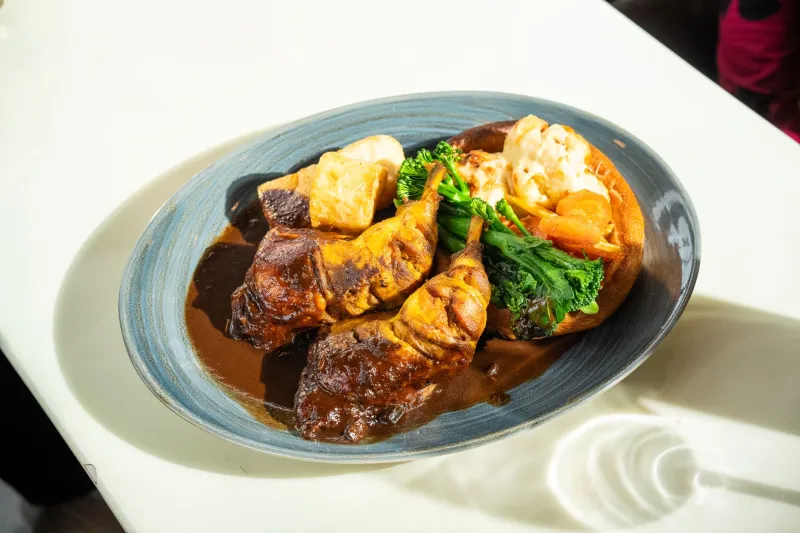
The easiest way to build a balanced Christmas dinner is to think about proportions rather than numbers. Picture your plate: a good portion of turkey or another protein, a generous pile of vegetables, a couple of roast potatoes, a Yorkshire pudding, stuffing and a few pigs in blankets. That is already a decent starting point. You do not need to remove anything. You just want the protein and veg to have a fair share of the space.
If you are hosting, this is easier than it sounds. Put the vegetables in serving dishes that people actually pass around. Keep the pigs in blankets on the table, because Christmas without them is a tough sell. The trick is to make the higher-protein and higher-fibre options just as easy to reach as the bread sauce.
The protein layer: turkey, ham and the humble sausage
Turkey is a genuinely lean protein, which is one reason it works so well on a macro-friendly plate. A 150g serving of cooked turkey will usually give you somewhere around 35g of protein, depending on the cut. Gammon is another good option if you are doing a ham as well, and leftover ham is brilliant for Boxing Day.
Pigs in blankets are not a health food, and that is fine. They bring protein from the sausage and bacon, plus a lot of flavour. Keep two or three on your plate and enjoy them. If you are making them from scratch, you can use a higher-welfare sausage and not worry too much about the rest. The same goes for stuffing: sausage meat stuffing adds protein, while chestnuts and wholemeal breadcrumbs add a bit of fibre. You do not need to make a separate diet version.
Fibre is the quiet hero
Christmas vegetables often get treated as a garnish, but they can do a lot of work. Brussels sprouts, red cabbage, carrots, parsnips and chestnuts all bring fibre to the table. Roast sprouts with a little olive oil and chestnuts, or shred red cabbage with apple and a splash of vinegar. Carrots and parsnips can be roasted alongside the potatoes. None of this is radical, but it makes the plate more filling and more interesting.
If you want to push fibre a little further without changing the tradition, use wholemeal bread for stuffing and bread sauce. Add lentils to leftover gravy or soup. Keep the skin on potatoes if you are roasting them. These are small moves, but they add up over the festive week.
Keep the Yorkshire puddings and gravy
Yorkshire puddings are not a macro sin. They are part of the meal. Have one or two, especially if they are homemade and hot from the oven. Gravy is also non-negotiable. Make it from the roasting juices and a good stock, and you will get flavour without needing to drown the plate. If you are worried about richness, serve gravy in a jug so people can choose how much they want.
The point is not to make Christmas dinner low-calorie. The point is to make it satisfying. A plate with protein, vegetables, potatoes, stuffing, a Yorkshire and a couple of pigs in blankets is a proper meal. It will keep you fuller for longer than a plate of just potatoes and gravy, and it will still feel like Christmas.
A realistic macro snapshot
Exact numbers depend on brands, portion sizes and how generous you are with the gravy, but a typical plate might look like this: 150g turkey, two pigs in blankets, one stuffing ball, one Yorkshire pudding, a mix of sprouts, carrots and red cabbage, and a couple of roast potatoes. That could land somewhere around 50g to 60g of protein and 10g to 12g of fibre, before pudding. It is an estimate, not a target.
If you track macros, log it loosely and move on. Christmas dinner is one meal. The overall pattern over the festive period matters more than getting every gram right on 25 December. If you do not track, you can still use the plate strategy: protein, veg, potatoes, treats. That is enough.
Leftovers that do some work
Boxing Day is where a macro-minded Christmas really pays off. Leftover turkey and sprouts can become a hash with eggs for brunch. Leftover vegetables and gravy can go into a soup with a handful of lentils. Sliced turkey, stuffing and cranberry in a wholemeal sandwich is a classic for a reason. You can freeze leftover turkey in portions if you do not want to eat it all in two days.
The leftovers approach is not about being virtuous. It is about making the food go further and giving yourself easy options when the fridge is full of odd bits. A bowl of turkey and vegetable soup with a slice of wholemeal bread is a good lunch. A plate of cold pigs in blankets is also a good lunch, but maybe add some tomatoes.
The non-restrictive rule
The most important macro-friendly Christmas strategy is not to make the day stressful. Have the pudding. Have a mince pie. Have a glass of something if you want one. The goal is to enjoy the meal and feel decent afterwards, not to earn a gold star for protein. A balanced Christmas plate is one that has room for tradition, flavour and a bit of nutrition. Keep the pigs in blankets. Add the sprouts. Make the gravy. That is the MacroFood way.