The Humble Jacket Potato Deserves Better Than Your January Reset
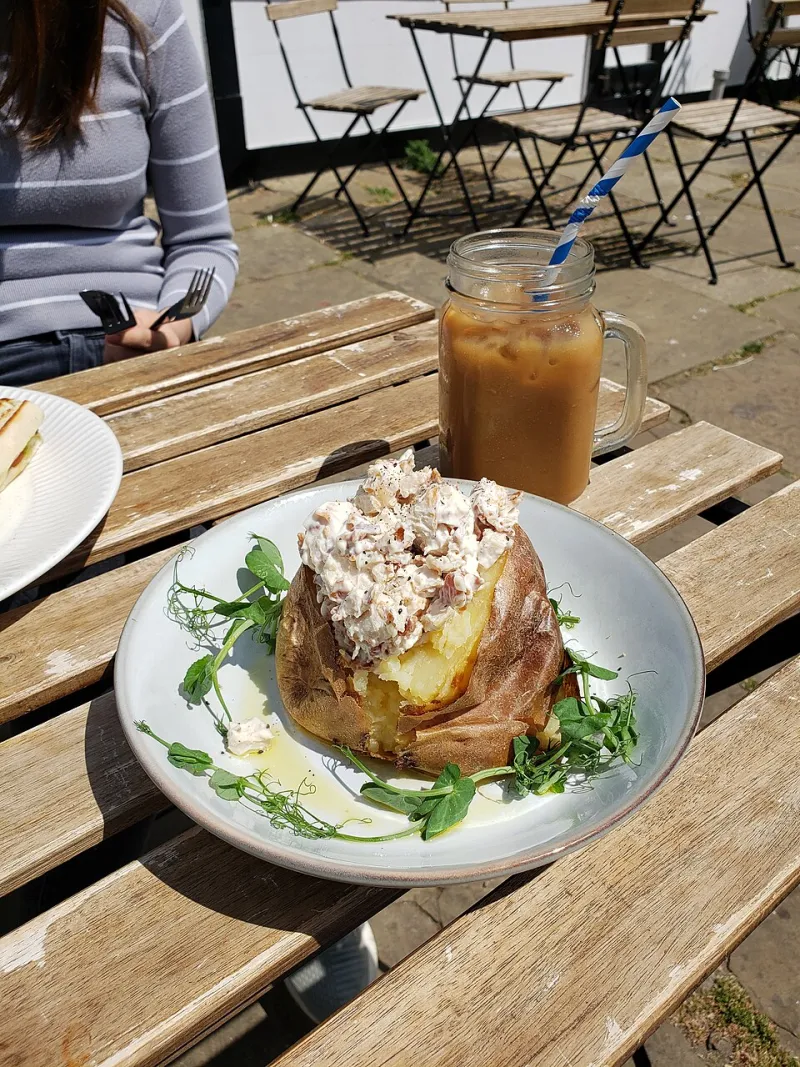
Photo: Andy Li, CC0, via Wikimedia Commons
Every year, without fail, a certain kind of language creeps back into the food conversation. Carbs become 'indulgences'. Bread becomes 'a treat'. Cheese gets spoken about in the same tone people use for a parking fine. And the humble jacket potato — a food so unpretentious it comes with its own packaging — gets quietly demoted to something you eat when you've given up.
Let's push back on that, because it's not just annoying. It's actively unhelpful for anyone trying to eat well on a normal budget in a normal week.
'Clean' is doing an enormous amount of unpaid work
The word clean implies its opposite. If a baked potato with beans is clean, what's a baked potato with cheese and butter? Dirty? Irresponsible? The vocabulary smuggles in a moral judgement before you've even looked at the numbers.
And the numbers are not scary. A medium baking potato, around 250g, is roughly 200 calories, 5g of protein, and about 4–5g of fibre if you eat the skin — which you should, because that's where most of it lives. It's also one of the most satiating foods measured in controlled studies, which is a polite way of saying it keeps you full in a way that a 200-calorie bag of crisps simply doesn't.
Compare that to the 'lighter' alternatives people swap in: a plain rice cake, a small pot of fat-free yogurt, a sad little salad. Cheaper on calories, more expensive on satisfaction. You eat again an hour later, which is not a strategy.
Bread is a fibre delivery system that happens to taste good
Sliced bread has been through the mill — quite literally — in public opinion. But a standard wholemeal loaf in a UK supermarket is one of the cheapest sources of fibre on the shelf. Two slices typically give you 5–7g of fibre and 6–8g of protein for around 160–200 calories.
That is a genuinely good deal. Beans on toast made with wholemeal bread can land at roughly 20g of protein and 12g of fibre for under 400 calories and well under a pound in ingredients. Find me another lunch that does that.
The issue was never bread. It was the assumption that a sandwich must involve three fillings, a bag of crisps and a fizzy drink. Strip it back and a cheese and tomato sandwich on wholemeal is a perfectly decent, portable, macro-reasonable lunch.
Cheese is a protein food that got typecast as a garnish
Cheddar gets treated as a condiment, which is a shame, because 30g of it delivers around 7g of protein and a decent chunk of your daily calcium for about 120 calories. That's not nothing. Grated into a jacket potato, melted over vegetables, or sliced into a sandwich, it makes food taste good enough that you actually finish it.
There's also a practical argument here about adherence. Food you enjoy gets eaten again next week. Food you tolerate gets abandoned by Thursday, replaced by a takeaway, and then you're back to square one wondering why nothing sticks.
Three plates that show the maths
The classic jacket. One 250g baking potato, 120g baked beans, 30g grated cheddar, a big handful of salad or steamed broccoli. Roughly 480 calories, 22g protein, 12g fibre. Ten minutes of effort, most of it waiting.
Beans on toast, upgraded. Two slices of wholemeal bread, half a tin of beans, a poached egg, black pepper, maybe a bit of hot sauce. Around 430 calories, 24g protein, 11g fibre.
The cheese sandwich that isn't a crisis. Two slices wholemeal, 40g cheddar, tomato, a smear of mustard, an apple on the side. Roughly 420 calories, 20g protein, 8g fibre.
None of these are austere. All of them are cheap. Each one leaves room in the day for a proper dinner.
The budget doesn't lie
A block of cheddar, a loaf of wholemeal bread and a bag of potatoes is one of the cheapest shopping baskets in the country. If your approach to eating well requires £4 protein yogurts and a bag of seeds, it's not a plan — it's a subscription.
That matters for the macro conversation specifically, because the advice that circulates most loudly online tends to assume a level of spend that most households don't have. Potatoes, bread and cheese fit a tight week without forcing anyone into the reduced aisle at 8pm.
Where the swap culture goes wrong
There's a whole genre of advice built on replacing things. Swap the potato for cauliflower. Swap the bread for lettuce. Swap the cheese for nutritional yeast. Some of these are fine occasionally, and none of them are dangerous. But collectively they send a message that the original food was a problem to be solved.
Food policing is also exhausting in a way that's easy to underestimate. Every micro-decision about whether something is 'allowed' draws on the same mental energy you need for actual cooking. Cut the policing and you get some of that back — which usually means better meals, not worse ones.
Flexibility isn't a loophole. It's the mechanism by which any way of eating survives a Tuesday in November.
What balance actually looks like on a plate
It's not a pyramid and it's not a traffic light. It's roughly this: a protein source you can identify, a carbohydrate portion that's honest about its size, vegetables in a quantity that would embarrass a garnish, and some fat for flavour. A jacket potato with tuna and sweetcorn does that. So does a cheese sandwich with a bowl of soup.
You don't need to earn a baked potato. You need to cook one, put something decent on it, and eat it sitting down.
The bottom line
Potatoes, bread and cheese are not the enemy, and treating them like one has cost a lot of people a lot of good, affordable meals. They're fibre, protein, calcium, satisfaction and a few hundred calories that fit perfectly well inside a balanced day.
Eat them. Enjoy them. Count them if counting helps, ignore the guilt either way.